

Recovery time for breast reduction is a primary concern for anyone considering this procedure. When most patients search online, they want a clear idea of how long it will take to heal, when they can resume normal life, and what to expect along the way.
Breast reduction surgery by SZ Plastic Surgery – Sanam Zahedi MD Aventura, involves removing excess breast tissue and excess fat from very large breasts, aiming to alleviate symptoms like back and neck pain. By understanding the breast reduction procedure and the recovery period, many women can approach surgery confidently and realistically.
What Is Breast Reduction Surgery
Breast reduction, also called reduction mammaplasty, is a surgical procedure to remove excess fat, breast tissue, and skin to create a more proportionate breast size and reduce discomfort.
Many women with very large breasts suffer from back and neck pain, shoulder grooving from bra straps, and skin irritation beneath the breast crease.
Removing excess breast tissue helps alleviate these symptoms and can significantly improve quality of life.
A breast reduction consultation with a board-certified plastic surgeon is the first step. During that visit, you’ll talk about your goals for breast size, shape, and what to expect during recovery.
Breast Reduction Before and After

Proper preparation before and after breast reduction can help ensure a smoother recovery process.
Here are key steps:
- Stop using tobacco products. Smoking or nicotine use can slow the healing process and raise complication risk.
- Stay hydrated and eat a healthy diet. Good nutrition supports your body’s ability to heal.
- Share medical history and concerns. During your breast reduction consultation, discuss chronic conditions, medications, and expectations with your plastic surgeon.
- Arrange support. Many patients rely on a friend or family member to help during the early recovery period, especially the first few days.
- Follow preoperative guidelines. Your surgeon may ask you to stop certain medications (e.g. aspirin, herbal supplements) that can increase bleeding risk. With these steps, you give your body the best chance for a smooth recovery.
The First Week After the Procedure
The first week is critical to achieving a smooth recovery and minimizing complications.
What to Expect
- You may experience pain, swelling, bruising, and tenderness in and around the breasts. This is normal.
- Residual swelling and mild discomfort are common. Some swelling may persist for months.
- You’ll probably feel tender and restricted in movement, especially lifting your arms or reaching overhead.
Post-Op Instructions & Care
- Follow your plastic surgeon’s post op instructions carefully, these are tailored to your anatomy and procedure.
- Wear a surgical bra or compression garment continuously (as directed) to support your breasts and reduce swelling.
- Avoid strenuous exercise, heavy lifting, and vigorous activities. Even lifting small objects can strain your incisions.
- Keep incision sites clean and dry to reduce the risk of infection.
- Take pain medication as directed by your surgeon to manage discomfort and enable rest.
Most patients will stay home, rest, and limit movement during this period. The first week forms the foundation of the entire recovery period.
Post-Surgery Care & Recovery Process
After the first week, care continues progressively. Here’s how to navigate this phase:
Wound Care & Dressings
- Continue to care for incision sites gently, following your surgeon’s protocol.
- Avoid underwire bras until fully cleared — they can irritate and stress healing tissues.
- Use ice packs intermittently (if recommended) to control swelling and reduce pain.
Managing Swelling & Discomfort
- Some residual swelling is a normal part of the healing process and may last for several months.
- Staying hydrated, eating nutritiously, and resting help your body reduce swelling naturally.
- Avoid sodium overload or processed foods that can worsen fluid retention.
Pain & Discomfort
- Use pain medication as prescribed. Many patients find relief in the first couple of days, then taper off.
- Mild discomfort or tightness is common for weeks, especially near bra straps or incision sites.
Monitoring & Follow-Up
- Attend scheduled follow-up appointments with your surgeon to monitor healing, remove sutures (if needed), and address concerns.
- Report any signs of infection (redness, excessive swelling, unusual pain) or unusual discharge to your healthcare provider immediately.
This ongoing period is where your body gradually restores and you begin to see progress toward your final results.
Breast Reduction Recovery Timeline
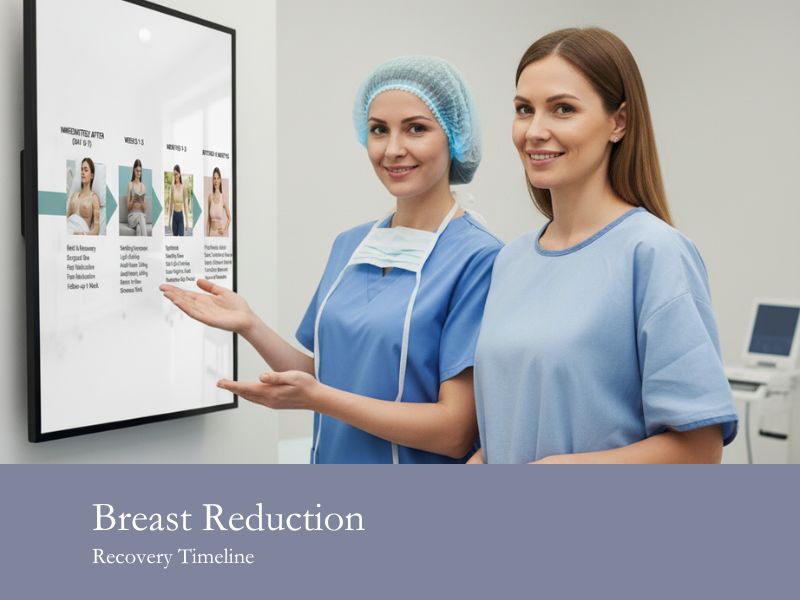
Understanding the timeframes helps you plan and adjust expectations. Below is a rough guide:
Short-term recovery typically lasts about three weeks, after which long-term recovery can span 3 to 6 months or more.
Keep in mind: most patients do not see the absolute final breast shape until several months post surgery.
Physical Activity During Recovery
Exercise and movement must be reintroduced gradually. Below is guidance:
Light Activities Early On
- Begin with light exercise like short walks inside the house—this helps circulation and reduces the risk of blood clots.
- Always wear a supportive bra or compression garment during any movement.
Avoid Strenuous & Vigorous Exercise
- Avoid strenuous activities, heavy lifting, bending, or vigorous exercise for at least 6 to 8 weeks.
- Do not lift heavy objects or housework chores that strain the chest.
Returning to Normal & Rigorous Activities
- After 6–8 weeks (or as cleared by your surgeon), you may gradually introduce more vigorous exercise.
- Even then, listen to your body. Some residual tenderness or swelling may persist with activity.
This phased approach respects your body’s pacing and helps minimize setbacks.
Resuming Normal Activities
Many patients are eager to return to their routines after surgery. Most can resume non-strenuous work within one to two weeks, once they no longer need prescription pain medication.
Physically demanding tasks, heavy lifting, and sexual activity should wait until your surgeon approves. Gradually reintroduce daily chores and personal care, asking for help when needed.
Prioritize healing over speed — rushing recovery can slow your progress and affect your results.
Breast Reduction Scars, Size, Shape & What to Expect
After your breast reduction procedure, your breasts will gradually take on a new shape and size that better fits your body’s proportions.
It may take several months for the final shape to settle as swelling slowly decreases. Some residual swelling is normal and part of the healing process, so patience is important.
As recovery progresses, you should feel more comfortable, with reduced back and neck pain. Many women notice a significant improvement in their overall well-being.
Breast reduction scars will fade with time, though they won’t disappear completely. Following your surgeon’s scar care recommendations will help them heal more smoothly.
With proper care, your breasts will eventually settle into their new, stable form, and you’ll be able to fully enjoy the results.
Tips for a Smooth Recovery Period
Here are handy tips to promote recovery:
- Stay hydrated and eat nutrient-rich foods.
- Avoid tobacco products and nicotine.
- Use supportive bras or compression garments, especially in early weeks.
- Avoid underwire bras until your surgeon says it’s safe.
- Get plenty of rest, sleeping on your back may help prevent pressure on the incisions.
- Keep incision sites clean and dry.
- Attend all follow-up appointments and follow post-op instructions.
- Avoid heavy lifting, bending, or strenuous activity until cleared.
- Listen to your body, if you feel pain or discomfort, slow down.
- Limit sodium, manage swelling, elevate your upper body when resting.
- Use ice packs (if recommended) and pain medication as directed.
- Have extra support during daily tasks so you don’t over-exert yourself early.
- Avoid using underwire bras or pressure on bra straps during vulnerable healing.
These strategies help ensure your body’s healing ability can do its work without undue stress.
Conclusion
Breast reduction surgery offers many women a path to improved comfort, health, and confidence. Understanding the recovery time for breast reduction, from the first week through later months, empowers you to set realistic expectations and follow a care plan suited to your body.
The recovery process demands patience, consistent care, and open communication with your plastic surgeon. With proper planning, you can move through each phase, first week, intermediate healing, physical activity reintroduction, and final settling, smoothly and safely.
Remember: every patient is unique. While general timelines help, your body’s pace dictates your true recovery. Stay informed, follow your surgeon’s guidance, and be gentle with your healing process. In time, you can look forward to final results, improved well-being, and a new breast shape that better suits your life.
Breast Reduction Recovery Time FAQs
Is breast reduction surgery safe?
Yes, breast reduction surgery is considered safe when performed by a board-certified plastic surgeon on properly selected patients. Research shows the overall complication rate ranges from 6.2%, with major complications occurring in only 3.0% of cases. While all surgical procedures carry inherent risks such as bleeding, infection, anesthesia reactions, and scarring, serious complications are rare in breast reduction surgery when conducted in appropriate settings with careful patient screening.
Is breast reduction covered by insurance?
Breast reduction may be covered by insurance when deemed medically necessary to treat physical symptoms caused by excessively large breasts, such as chronic back, neck, or shoulder pain, skin irritation, or postural problems.
Insurance companies typically require documented proof of these symptoms, evidence that conservative treatments (like physical therapy or pain medication) have failed, and that a minimum amount of breast tissue will be removed based on your body surface area
How long is the recovery time for breast reduction?
Most patients can expect a short-term recovery of about 3 weeks, with longer-term recovery spanning 3 to 6 months for full healing and settling of the breasts. During this time, swelling will continue to fade, scars will mature, and your breasts will gradually achieve their final shape.
When can I resume light physical activity?
You can usually begin light activities, like walking, within a few days after surgery (as long as it doesn’t strain the chest). Avoid vigorous exercise, heavy lifting, or strenuous activities for at least 6–8 weeks or until your surgeon approves.
How long does residual swelling last?
While most swelling subsides in the first few weeks, residual swelling can persist for several months. It’s a normal part of the healing process. Some patients experience subtle residual swelling for up to 3-4 months or longer, which gradually diminishes as the tissues continue to heal and settle into their final position.
When can I return to work or normal activities?
Many women with desk-based or light jobs return in 1–2 weeks, once pain medication is no longer needed. But physically demanding or heavy-lifting tasks should be postponed until cleared by your surgeon. Most patients can resume full exercise routines and strenuous activities around the 4-6 week mark, depending on their individual healing progress.
Do scars fade, and when will the final breast shape appear?
Scars will fade over time, but won’t disappear completely. The final breast shape generally takes 3 to 6 months (or more) to settle as swelling fully resolves. Breast reduction scars typically require 6 months to a year to fully mature, during which time they will gradually lighten in color and flatten with proper scar care.
Will I still have neck pain or back pain after surgery?
Many patients find that back and neck pain are significantly reduced after removing excess breast tissue. However, proper posture, strength training, and avoiding weight fluctuations help maintain long-term relief.
Ready for Your Breast Reduction Consultation?
Thinking about breast reduction surgery? Schedule your consultation with Dr. Sanam Zahedi, a board-certified plastic surgeon. During your visit, you’ll receive personalized guidance, review before-and-after photos, and discuss a recovery plan designed specifically for your body. From choosing the right post-surgical bras to understanding every step of healing, Dr. Zahedi and her team ensure your comfort and long-lasting results.