
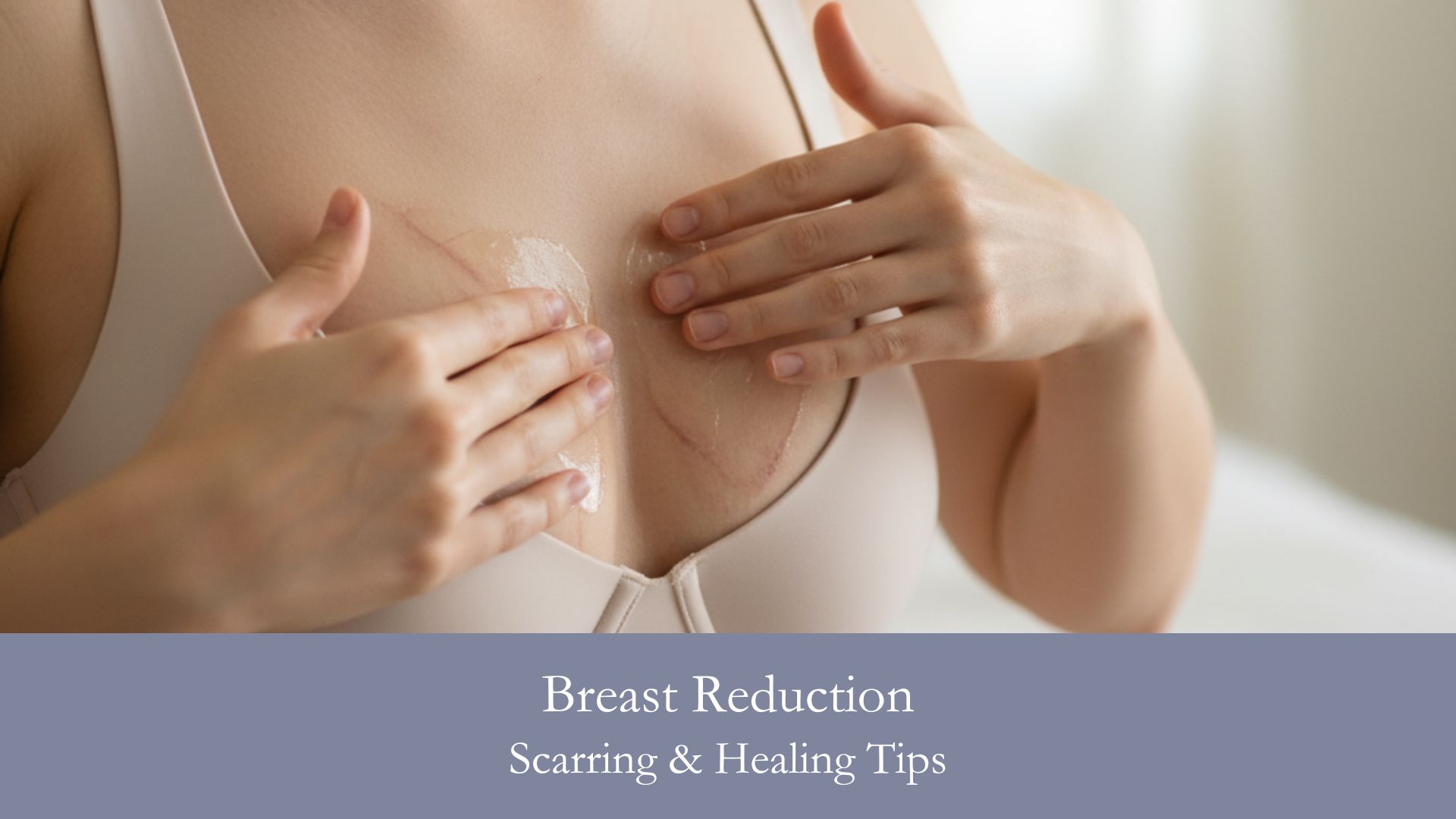
Breast reduction scarring is a major concern for many patients considering breast reduction surgery. Scars are an inevitable part of the healing process, but with the right techniques and care, you can keep them discreet, natural-looking, and well integrated with your skin tone.
This guide explains how scars develop after breast reduction performed at SZ Plastic Surgery, what factors affect their appearance, and effective, surgeon-recommended strategies Sanam Zahedi, MD uses to help patients reduce visible scarring as healing progresses.
What Happens During Breast Reduction Surgery
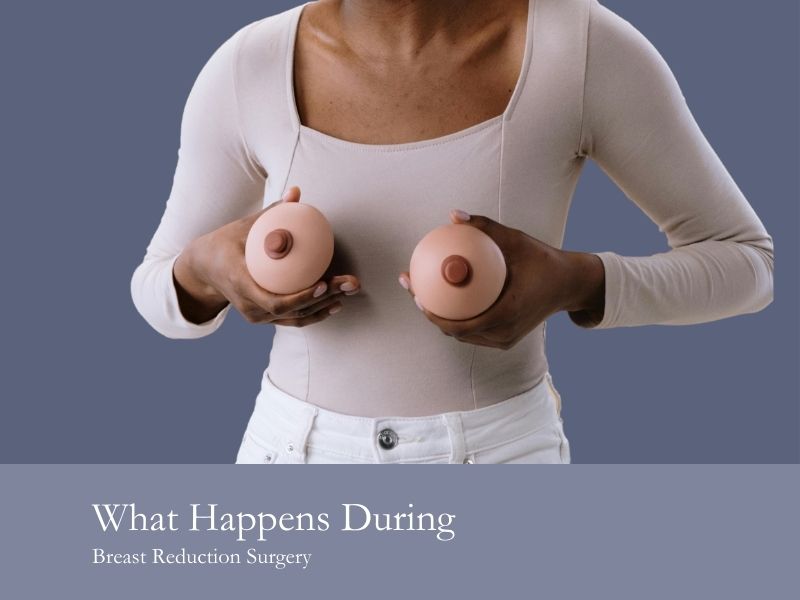
During a breast reduction procedure, the surgeon removes excess breast tissue, fat, and skin to create a smaller, more proportionate breast size.
Each incision is carefully planned to reshape the breast, reposition the nipple–areola complex, and restore a natural, balanced breast shape.
The incision pattern you and your surgeon select will determine how visible your surgical scars will be after healing.
As the tissue recovers, scar tissue naturally forms in the incised areas, creating the final contour of your scars.
The key challenge is achieving the desired reduction, especially for large breasts, while keeping scarring as minimal as possible and maintaining sensation, function, and aesthetics.
Incision Types & Their Scarring Tradeoffs
Different approaches lead to different scar patterns and healing dynamics.
Anchor (Inverted-T) Incision
- Three cuts: around the areola, vertically down, and horizontally along the breast crease (inframammary fold).
- Good for extensive reduction and heavy sagging, but results in more scar length.
- Horizontal scar along the inframammary fold may be easier to hide under bras and natural folds.
Vertical (Lollipop) Incision
- Two incisions: a circular one around the areola + vertical line to the breast crease.
- Less horizontal scarring, suitable for moderate reduction.
- Many surgeons prefer this for balancing shape and minimizing scar length.
Periareolar (Donut) Incision / Short-Scar Techniques
- Single circular incision around the areola.
- Best for smaller reductions or minimal sagging.
- When feasible, this helps minimize breast reduction scars dramatically.
- Some surgeons use short scar techniques to avoid the full horizontal limb.
Your surgeon may also combine techniques depending on how much tissue must be removed and how your skin elasticity and skin tone respond.
How Breast Reduction Scars Form & Vary
Influences on Scar Visibility
- Skin tone & pigmentation: People with darker skin tones may show more contrast in raised scars or pigmentation changes.
- Skin elasticity & tension: Tighter skin or tension across the wound can worsen scarring.
- Genetic predisposition: Some patients are prone to hypertrophic scars or keloid scars.
- Technique & closure method: Precision in how the surgeon makes incisions and closes them (suture technique, tension lines) matters a lot.
- Postoperative care & complications: Infection, wound separation, and delayed healing all worsen scarring.
Timeline of Scar Healing
Scars after breast reduction tend to mature over a year. While they may completely disappear, they often become faint lines hidden in natural folds like the inframammary crease or around the areola.
Because breast reduction scars vary, you should expect variability based on your skin and the surgery.
Breast Crease Scars and the Healing Process After Breast Reduction Surgery
During the procedure, excess breast tissue is removed to reduce overall breast size and relieve symptoms such as neck pain. The chosen incision pattern determines where the incision site is placed, often following the breast crease to help scars blend naturally as the healing process progresses.
As the healing process continues, the incision site along the breast crease is supported with surgical tape, and in some cases reinforced with additional surgical tape to protect incision lines, reduce tension, and promote better skin health.
In many patients, a carefully planned vertical scar that ends near the breast crease allows scars to fade toward a more natural skin tone, making long-term scar management easier and less noticeable.
How to Minimize Scarring After Breast Reduction
You can’t fully prevent scarring from breast reduction, but you can absolutely influence how visible it becomes.
Follow Postoperative Instructions to the Letter
- Use the surgical bra (or compression garment) exactly as prescribed, this helps reduce tension on scars.
- Keep your incisions clean and dry in the early days; avoid friction or pressure.
- Avoid smoking, which impairs blood supply and collagen production.
- Refrain from strenuous activity or heavy lifting in the first few weeks.
- Protect scars from sun exposure, as UV light can darken scars and make them more obvious, especially for those with darker skin tones.
Gentle Scar Massage
Once your surgeon gives the go-ahead (typically around 3–6 weeks):
- Use gentle pressure with fingertips; move in vertical, horizontal, and circular motions across the scar line.
- This helps break up adhesions in scar tissue, equalize collagen fibers, and improve skin elasticity.
- Over time, massage supports a smoother, more natural feel and tone.
Use Silicone & Topical Treatments
- Silicone gel sheets or silicone cream are often considered first-line for minimizing raised scars.
- Silicone helps by hydrating and forming a barrier that regulates collagen deposition.
- Many surgeons also allow or recommend topical agents like vitamin E oil, but always clear this with your surgeon, as overuse or incorrect use can cause irritation.
Monitor & Treat Early Raised Scars
- If you see hypertrophic or keloid scars forming, act early with mild corticosteroid injections, pressure therapy, or silicone use.
- Some scars may respond to laser therapy or pulsed-dye laser treatments to reduce redness and height.
- In rare cases, surgical scar revision may be used, but only after conservative methods have been tried and at least 12 months have passed.
Recovery Phases & What to Watch For
Early Phase (0–4 Weeks)
- Wear your surgical bra at all times (except when showering, or as directed).
- Avoid sleeping on your stomach or putting pressure on your breasts.
- Keep the incisions dry and follow wound care protocols.
- Do not engage in physical activity that strains your chest or shoulders.
Intermediate Phase (4–12 Weeks)
- Begin scar massage as permitted by your surgeon.
- Incorporate silicone sheets or gels.
- Monitor for signs of dangerous scarring like keloids or excessive thickening.
- Continue supportive wear and avoid sudden movements or stretching.
Late Phase (3–12+ Months)
- Scars should flatten and fade progressively.
- Consider laser, injections, or revision only if a scar remains thick or negatively impacts your overall appearance or breast shape.
- Maintain sun protection and healthy skin care habits.
Risk Factors That Can Affect Breast Reduction Minimal Scarring

- Smoking or nicotine use
- Poor nutrition or uncontrolled health conditions
- Infection, wound breakdown, or complications
- Excessive tension across the closing edges
- History of keloids or hypertrophic scars
- Lack of compliance with post-operative care
Your plastic surgeon should assess all of these risks during planning and customize techniques and aftercare to mitigate them.
Final Insights
While breast reduction scarring is inevitable, it doesn’t have to define your result. With informed surgical choices, careful execution, and diligent aftercare, most patients end up with subtle, low-visibility scars that fade into natural lines. You can also double-check before and after photos so you can compare results.
Focus less on the idea of zero scarring (which is unrealistic) and more on how well your scars can heal, blend with your natural skin tone, and support your improved breast shape.
FAQs: Breast Reduction Surgery Scarring
How safe is breast reduction compared to other surgeries?
Breast reduction demonstrates excellent safety outcomes with complication rates that compare favorably to other major cosmetic procedures. National surgical data reveal that the major complication rate for reduction mammoplasty is approximately 3.0% to 4.0%, with most issues being minor wound healing concerns rather than serious medical events.
What should I do if my BMI is too high for breast reduction surgery?
If your BMI for breast reduction surgery exceeds your surgeon’s recommended threshold, focus on gradual weight loss through a balanced diet, regular physical activity, and medical guidance. Many plastic surgeons prefer patients to have a BMI below 30-35 to reduce surgical risks and improve healing outcomes.
Does my insurance company’s BMI requirement affect my eligibility for breast reduction coverage?
Yes, many insurance companies impose body mass index (BMI) restrictions that can significantly impact breast reduction coverage eligibility. Some insurers require patients to be below a specific BMI threshold (commonly 30, 35, or 40, depending on the plan) before approving coverage, as higher BMI is associated with increased surgical risks and complications.
Will my breast reduction scars be permanent?
Yes, scars from breast reduction surgery are permanent in the sense that they never completely disappear, but most will soften, lighten, and fade significantly over 6–12 months, becoming thin lines consistent with natural skin tone. Over time, proper care and sun protection can make them barely noticeable to the casual eye.
How long before I can begin scar massage?
Gentle scar massage is typically recommended after 3 to 6 weeks, once the incision is well-healed. This helps break down scar tissue and support skin elasticity under the guidance of your surgeon. Always confirm timing with your provider, as healing speed varies between patients.
Do some patients develop keloid scars after breast reduction?
Yes, especially in individuals with darker skin tones, there is a risk of keloid scars or raised scar tissue. Surgeons may use preventative measures like silicone sheets or steroid injections if you have a history of keloids. Monitoring early changes in scar texture can help manage issues before they worsen.
Can I choose a scarless breast reduction technique?
In select cases with minimal skin excess and moderate reduction, liposuction-only or short-scar techniques (e.g. SPAIR) may minimize visible scarring. However, they are not suitable for all anatomies or degrees of reduction. A qualified plastic surgeon can assess if you’re a candidate for these limited-scar methods.
When is surgical scar revision considered?
If a scar remains thick, raised, or negatively impacts breast shape despite conservative therapies, surgical revision may be considered after at least 12 months. This is typically reserved for cases where less invasive treatments have failed. Your surgeon will evaluate whether the benefits outweigh the risks of additional surgery.
How do I prevent scarring worse during recovery?
Stick to your surgeon’s recovery instructions: avoid smoking, protect scars from sun exposure, wear support garments, avoid heavy activity early on, and use silicone gels or sheets for at least several months. Keeping the incision clean and moisturized can also support optimal healing and minimize scar formation.
Ready to Discuss Your Breast Reduction?
Take the first step toward lasting comfort and confidence by scheduling a breast reduction consultation with Dr. Sanam Zahedi. As a board-certified plastic surgeon, Dr. Zahedi provides personalized care and attention to detail, ensuring every patient feels supported throughout their transformation.
With a focus on safety, balance, and natural results, she’ll guide you through each stage of the breast reduction surgery process and design a recovery plan tailored to your needs.
Book your consultation today and start your journey toward lighter, more comfortable, and beautifully proportioned breasts.